
What this article covers
- Standard Watch Strap Hole Spacing
- Why Micro Adjustments Matter?
- Metal Bracelets: Clasp Micro Adjustment
- Two-Piece Leather, Rubber & Canvas Straps
- Deployant Clasps
- NATO Straps
- Adjustable Single Pass Straps with Ladder Buckles
- Micro Adjustability in the RSM Collection
- Future Deployant Clasp Development
Ever noticed your watch feels tight in the morning and loose in the afternoon? You’re not imagining it. Getting the right watch strap length is not just about choosing small, medium, or large. True comfort lives in the millimetres between lengths.
Most watch straps adjust in fixed steps. But wrists change subtly throughout the day. Micro adjustments bridge that gap, delivering the precise in-between fit that standard sizing cannot achieve.
If you've ever felt:
- One hole is slightly tight
- The next hole is slightly loose
You’ve experienced the 6 mm problem.
Standard Watch Strap Hole Spacing: Why the 6 mm Gap Exists

On most traditional two-piece watch straps, hole spacing is approximately 6 mm (6.35 mm center-to-center).
That means every adjustment changes strap length by around 6 mm — which is significant when worn snugly.
Why not 2 mm or 3 mm spacing?
Because durability matters.
If holes are placed too close together:
- There is insufficient material between holes
- Leather or rubber can tear
- Structural integrity weakens
The 6 mm spacing standard exists to balance:
- Adjustability
- Durability
- Longevity
But comfort often lives between those 6 mm increments.
Why Micro Adjustments Matter?
Your wrist size is not fixed. It changes due to:
- Temperature
- Humidity
- Activity
- Hydration
- Travel
These changes are often only 2–4 mm, smaller than standard hole spacing.
Without micro adjustment, your watch will either:
- Slide around
- Leave pressure marks
- Feel restrictive
Micro adjustment systems allow small refinements so your watch remains stable and comfortable all day.
Types of Micro Adjustment Systems
Metal Bracelets: Clasp Micro Adjustment

Many metal bracelets include micro adjustment built into the clasp.
Pin-Tool Clasp Adjustment
Features:
- 2–4 mm incremental adjustment
- Spring bar repositioning
- Requires a small tool
- Ideal after link removal
This is common in dive watches and sports models.
Two-Piece Leather, Rubber & Canvas Straps: Fixed Intervals
Most traditional straps using tang buckles rely entirely on fixed hole spacing.
Typical characteristics:
- 6 mm increments
- No in-between adjustment
- Limited precision
If your ideal fit falls between holes, you must tolerate slight tightness or looseness — unless you switch to a different adjustment system.
Deployant Clasps: Improved Wear, Limited Precision

Too much steel is exposed. Image credit: eBay
Deployant clasps improve:
- Strap longevity
- Wearing comfort
- Security
However, most still rely on strap holes for sizing.
Even adjustable deployants often introduce a new issue:
Excess Steel Exposure
Many adjustable designs expose large sections of metal underneath the strap.
For dress watches especially, this:
- Breaks material continuity
- Looks visually heavy
- Distracts from leather aesthetics
Balancing micro precision and clean design is difficult.
NATO Straps: Broad Range, Not Fine Adjustment
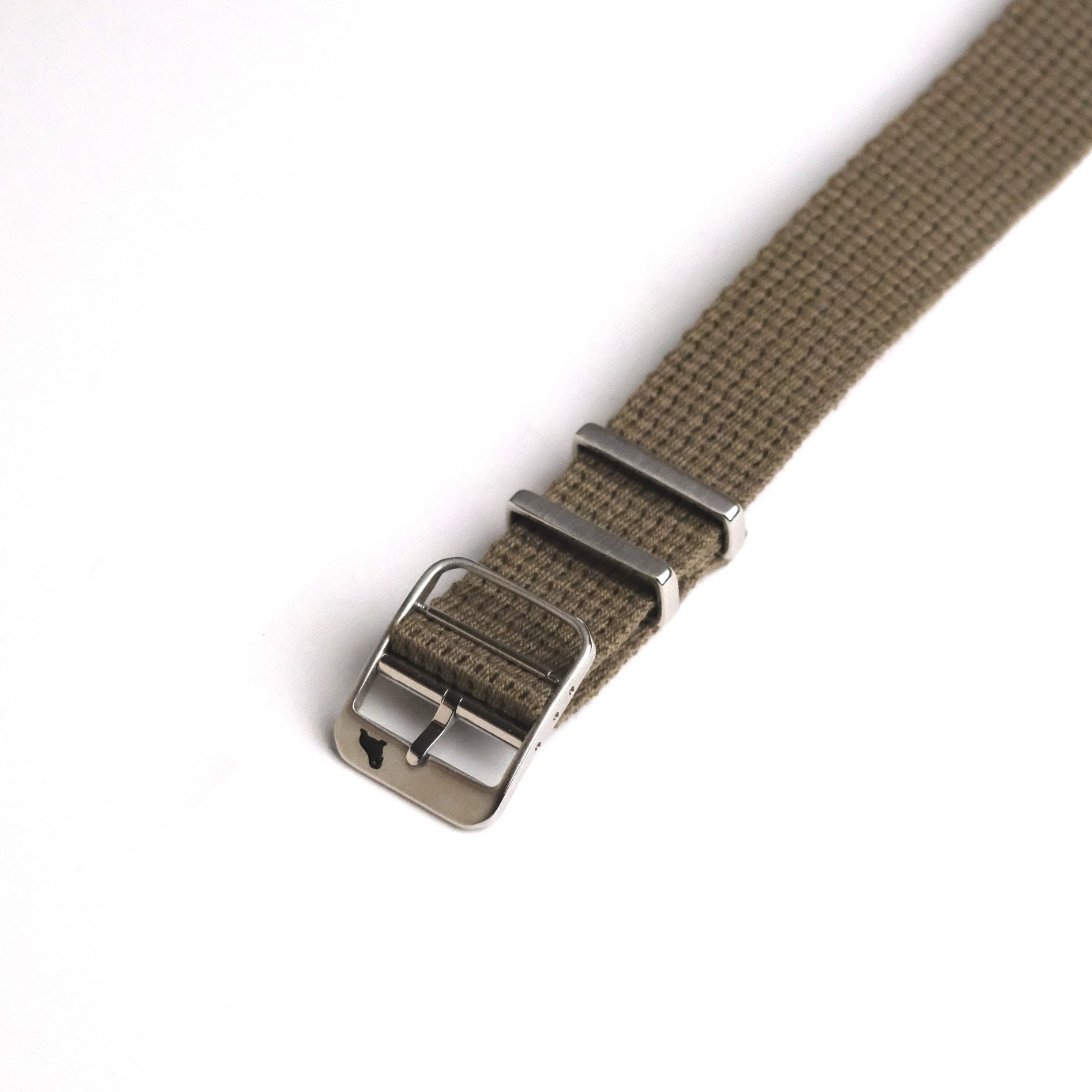
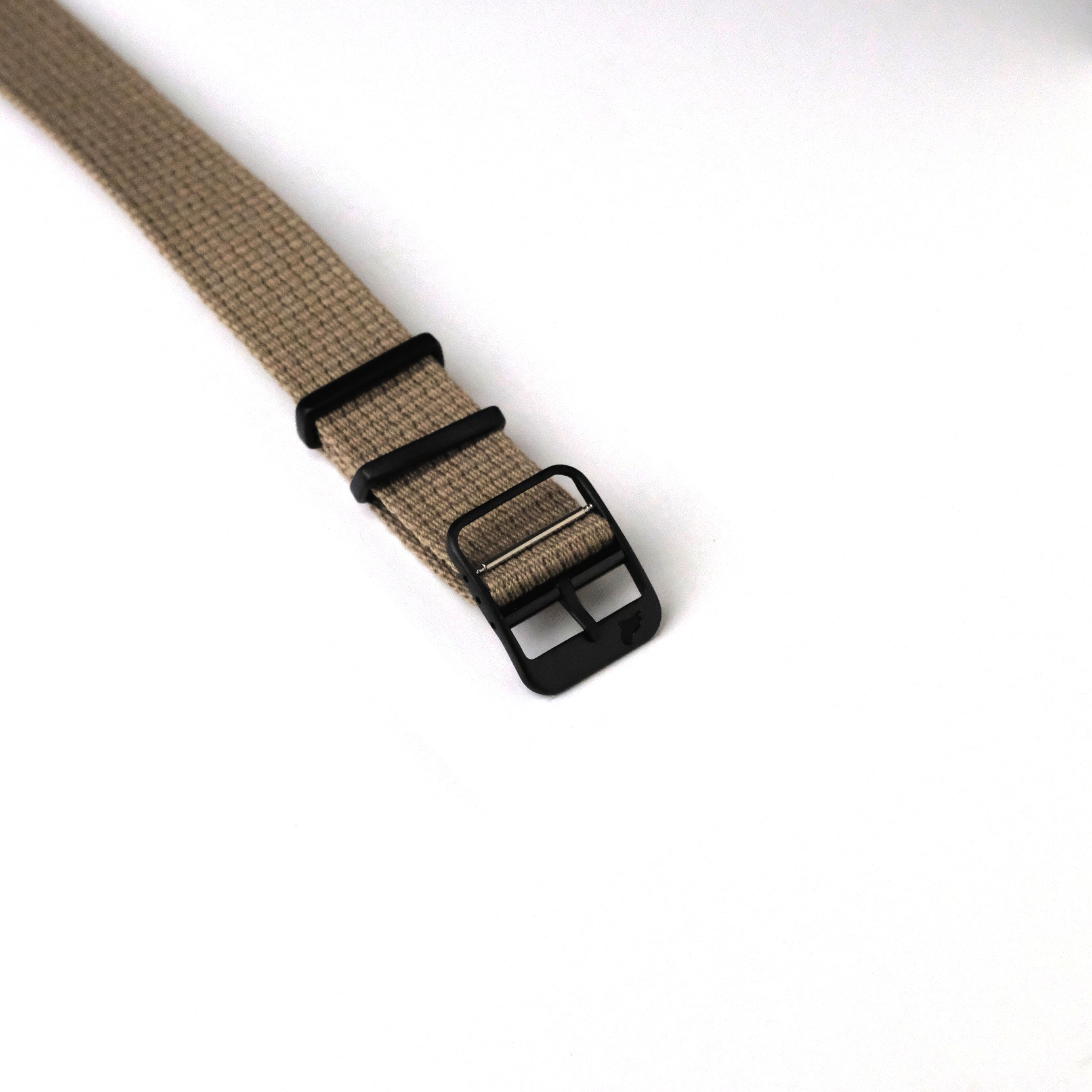
NATO straps wrap fully around the wrist and accommodate many wrist sizes.
But:
- They still use fixed buckle holes
- Excess length folds back
- Fine millimetre tuning is limited
They offer range, not precision.
Adjustable Single Pass Straps with Ladder Buckles: Continuous Fine Control

Single pass straps with ladder buckle systems eliminate fixed hole limitations.
Instead of punched holes, the buckle grips along multiple positions, similar to backpack adjustment hardware. Look at the different ways to loop through a ladder buckle at the bottom of here.
This provides:
- Near continuous sizing
- Very small incremental changes
- Tool-free adjustment
- Immediate resizing
This system removes the 6 mm constraint entirely. See our single pass watch straps collection.
Micro Adjustability in the RSM Watch Strap Collection
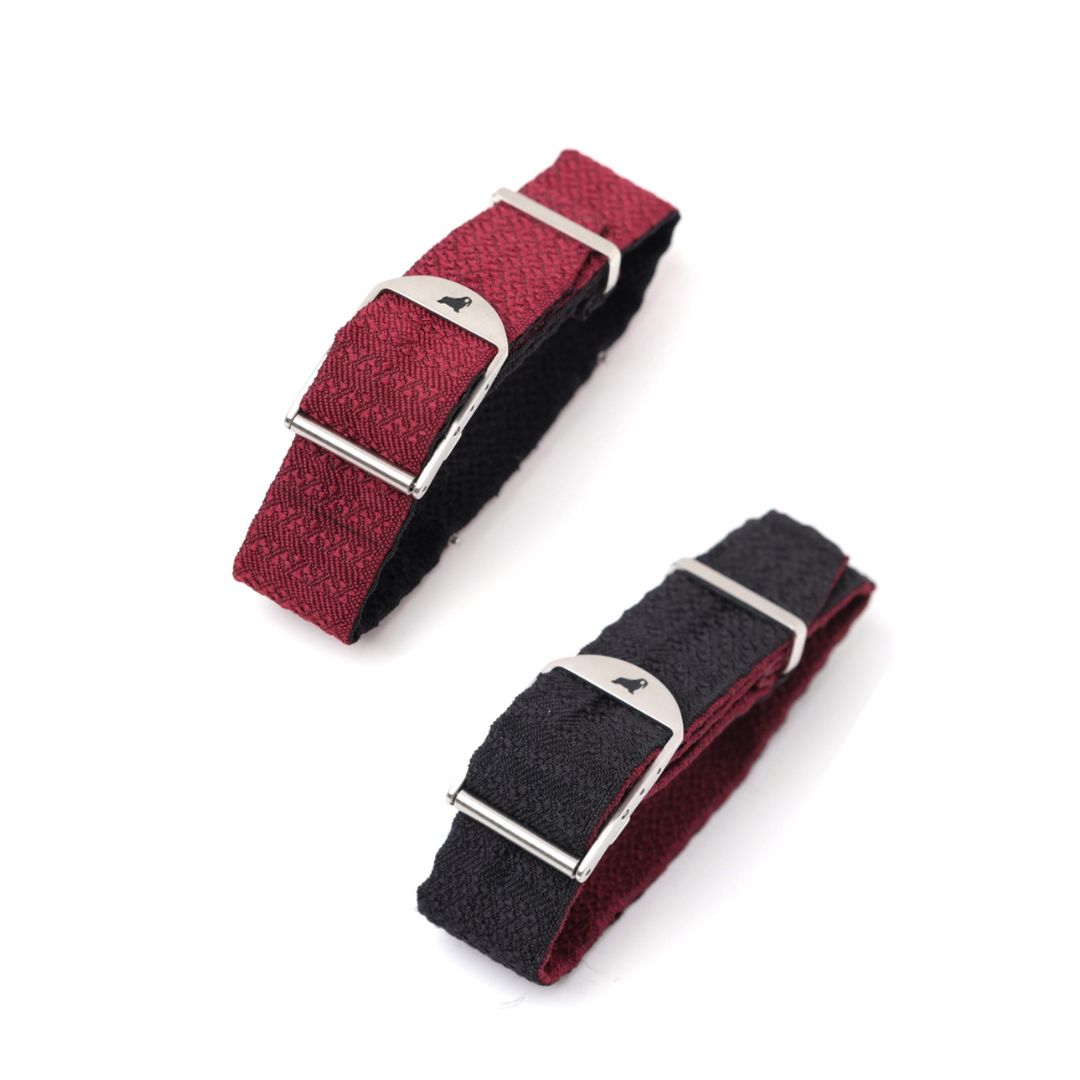
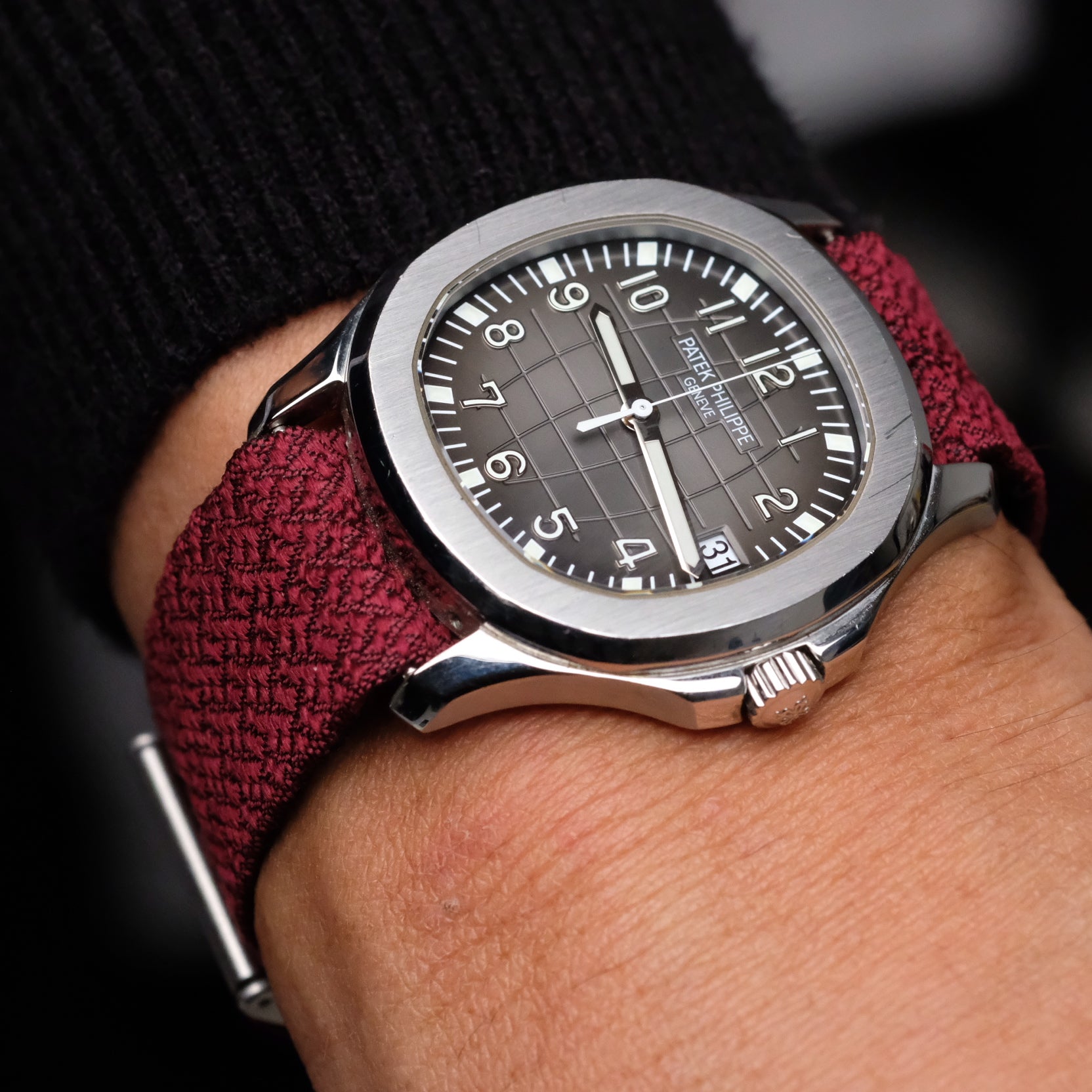
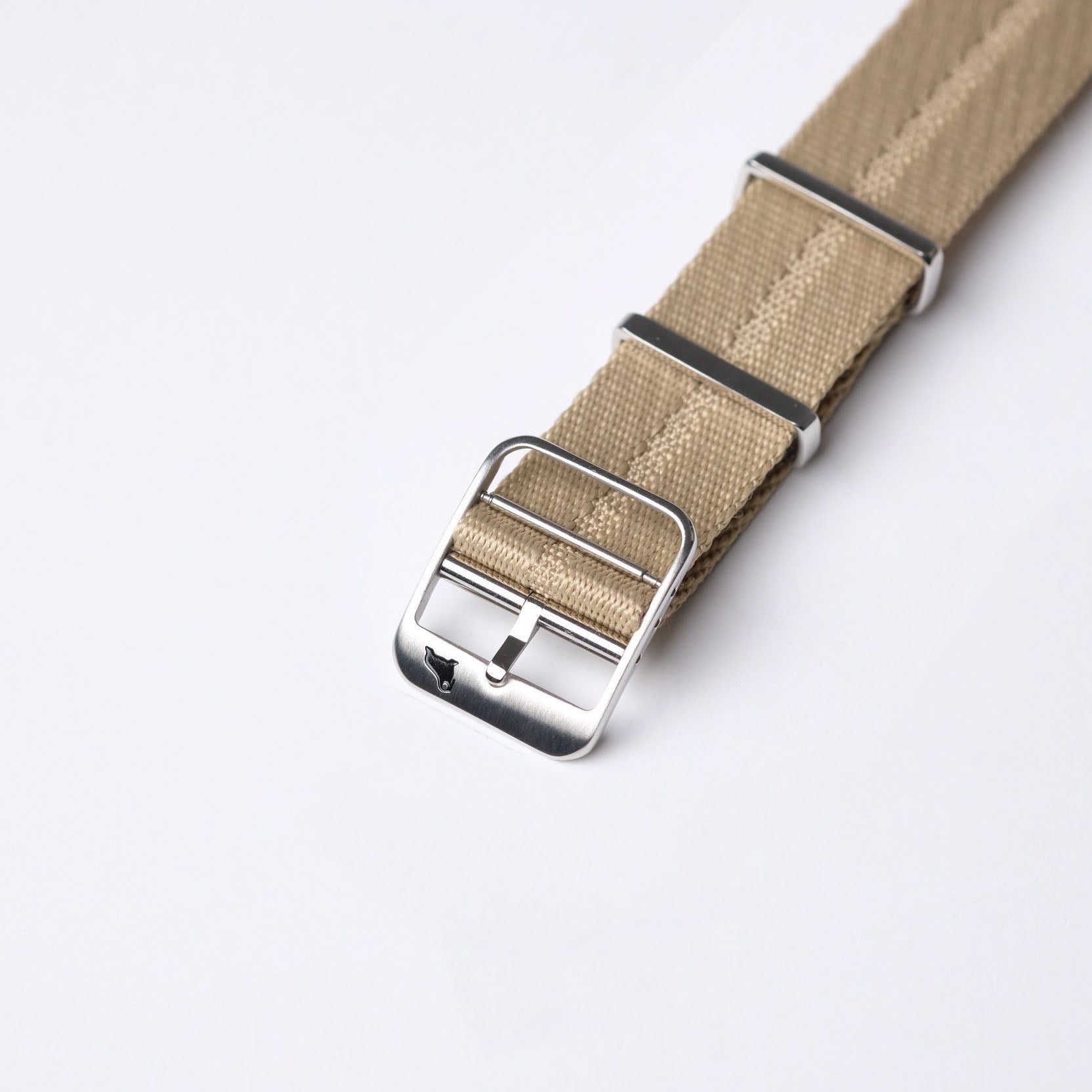
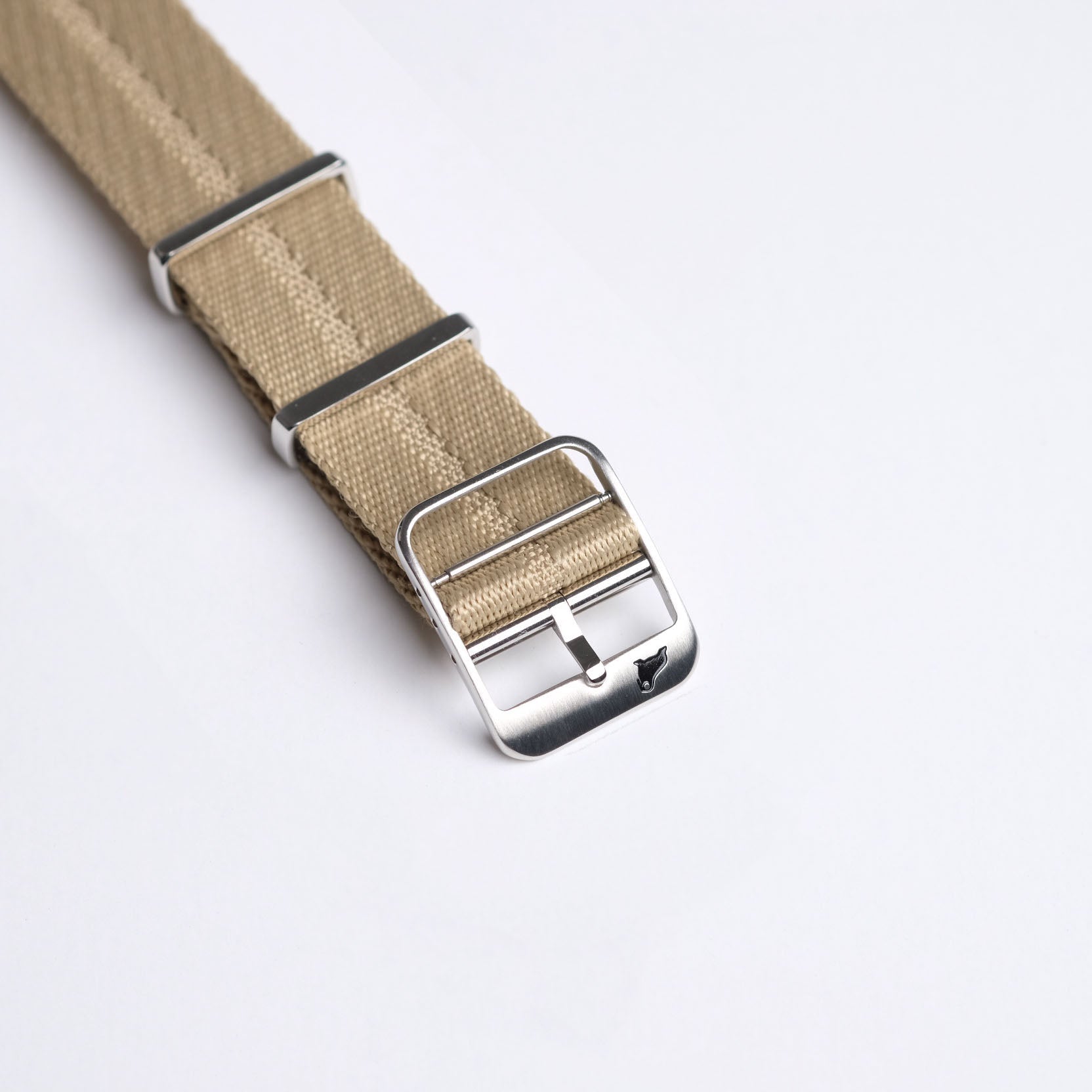
Within the RSM single pass watch strap collection, micro adjustment is built directly into the wearing experience.
Features include:
- Ladder buckle adjustment systems
- Matching keepers
- 316L stainless steel buckles
- Black PVD and gold-plated finishes
Because the buckle locks at multiple points along the strap, wearers can achieve highly precise sizing, ideal for fluctuating wrist conditions throughout the day.
How you can adjust the length of our straps (Video)
Rethinking the Deployant Clasp: What’s Coming in 2026

Precision and aesthetics rarely coexist in current deployant designs.
A new solution is in development featuring:
- Tool-free push-button adjustment
- On-the-go resizing
- 4 mm micro adjustment range
Why only 4 mm?
Because beyond 6 mm, it becomes more logical to reposition the strap hole already secured inside the clasp.
Micro adjustment should refine fit, not replace primary sizing.
After multiple manufacturing attempts, development is progressing. Expected release: 2026.
Follow us on Instagram @rsmwatchstrap for updates